

Build Your First SAP Portfolio Without Real Client Experience
If you’ve recently completed your SAP course or are knee-deep in SAP training, you are probably asking the million-dollar question: how can I prove that I’m capable of doing the job when I haven’t worked for any company? This is the classic dilemma faced by all freshers – you need experience to get a job, but you need a job to gain experience. The good news is that you do not need a real client project to impress your recruiters. By using some creativity and structure, you can create a portfolio that will be able to convince recruiters about your capabilities.
In this blog, we give you proper information about building your first SAP portfolio without real client experience. So, stay tuned to this blog.
Why a Portfolio Matters More Than a Certificate Alone

While an SAP Certification proves that you understand the theory of a subject, it doesn’t communicate how you resolve issues or think through various problems. A portfolio resolves this issue. By providing the employer with something that they can use to review your certification, the portfolio makes things easier for them. Consider your certification as evidence of theoretical knowledge and your portfolio as evidence of practical experience.
Start With Simulated Business Scenarios

You don’t need to use any real company to deal with real problems. Just choose a typical business scenario such as managing warehouse operations of a retail chain or delivering procurement processes in manufacturing and model that case as a sandbox and/or trial edition in SAP. Describe business requirements, outline your configuration process, and state the result. This kind of self-devised case study shows initiative and ability to convert a business problem into a practical solution.
Use Free Trial Systems to Create Hands-On Projects
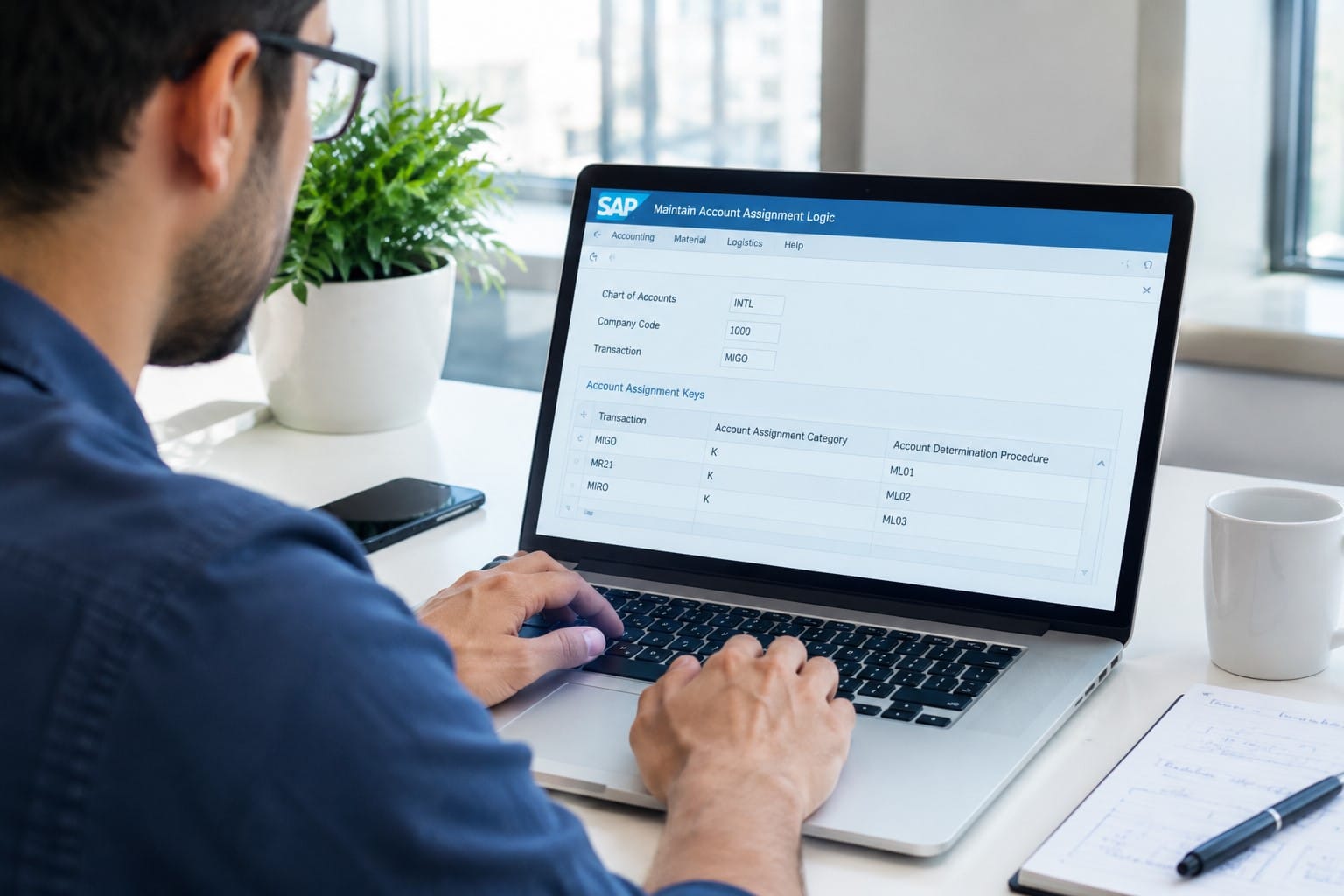
Many SAP modules are available for free trials in authorized learning portals. Make use of these environments to set up the modules, conduct test transactions, and resolve issues, just as you would do at your workplace. Save screenshots of each phase of your project as well as notes on any issues that arose and how you resolved them. Although these projects may be small, especially in scope, they are very useful in helping to demonstrate the practical application of the software.
Document Everything Like a Consultant Would
Documentation is crucial, as it is something distinguishing a good portfolio from a bad one. Real professional SAP consultants create documentation such as a functional specification document, configuration document, and test reports. So, you should also make these documents for your practice projects.
Every project, no matter how small, should be documented to report on the business problem, your methodology, your configuration screenshots, and the project results. Building such a habit will improve your portfolio and help you understand how documentation works in a real project.
Final Thoughts
Creating a portfolio without any relevant experience is not merely possible, but can even be wise for someone who is at the start of their career. It signifies innovation, true practice and fundamental knowledge of how SAP operates in real life. Programs such as Nextnow help those who would like to study SAP to bridge the gap between theory and practice by giving them the opportunity to use what they have learned during their SAP Course in practice.
FAQs
Q: I don’t have any real client experience. Will recruiters even take my portfolio seriously?
Sure. Recruiters are aware that beginners are unlikely to possess client experience. They are looking for your ability to reason like a consultant and apply what you know. If you are able to create a sound self-explanatory project, this can score you highly in this respect.
Q: How many projects do I actually need before my portfolio looks “complete”?
While there is no magic formula, three to five good projects should generally be enough to get you noticed. It is preferable to have a couple of strong works rather than ten mediocre ones. When it comes to projects, quality is more important than quantity.
Q: Can I really use free trial systems for this, or do I need paid access to SAP?
Free trial opportunities are sufficient when getting started in learning platforms that provide sandbox accounts for adjusting modules, performing transactions, and resolving issues the same way as in a workplace. This means that there is no need to purchase anything to create something of high quality.
Q: What if my coursework assignments feel too basic to show anyone?
It is more common than you may think and also not very difficult to remedy. Provide a context for your business problem, tell about your thought process and illustrate your work with screenshots and a brief description. This way the simplest task can become a part of your portfolio.