

SAP MM Procurement Process Explained With a Real-World Example
SAP MM Procurement Process Explained With a Real-World Example – In the modern world, companies require a procurement process that is quick, transparent, cost-effective, and controllable. This is where the SAP MM (Materials Management) process comes into play. The SAP MM procurement process is used by companies in order to efficiently handle the identification of material requirements, selection of suppliers, creation of purchase orders, goods receipt, invoice verification, and the payment process.
For companies that utilize the SAP S/4HANA software, the procurement process can be combined with inventory, finance, supply chain processes, etc. That is why SAP MM is an important part of the procurement process for those who want to automate the P2P (procure-to-pay) process.
However, it is essential to know how SAP MM procurement works. Find out about the whole process through a simple practical example.
What Is the SAP MM Procurement Process?
SAP MM procurement process is the system approach to material or service acquisition from outside suppliers. It begins with the identification of requirements and usually continues until purchasing, goods receipt, invoice verification, and payment.
A typical SAP procurement process cycle consists of these steps:
- Determination of Requirement
- Purchase Requisition (PR)
- Determination of Source
- Selection of Vendor
- RFQ, if needed
- Purchase Order (PO)
- Goods Receipt (GR)
- Invoicing & Verification of Invoice
- Payment
This entire sequence is often called the SAP procure-to-pay cycle.
Steps for SAP MM Procurement Process
1. Determination of Requirement
The procurement process starts when there is a need to obtain materials/services.
For instance, a manufacturing company realizes that the stock of its raw materials is less than the required level. There could be a manual requirement determination, or it could also be done using the Material Requirements Planning system (MRP).
The objective is to make sure that the correct material is available in the right quantity and on time.
2. Create Purchase Requisition
A Purchase Requisition (PR) is an internal document to order the procurement of goods or services.
Some details included in a Purchase Requisition are:
Material or Service to be procured
- Quantity
- Date of delivery
- Plant or Storage location
- Account Assignment, wherever needed
- Other Purchasing Requirements
Depending upon the structure of the organization, the PR may need approval prior to the purchasing department taking any actions.
3. Source Determination & Supplier Selection
After the requirement has been approved, the purchaser decides the most appropriate source of supply.
Several methods are available in SAP MM for deciding the most suitable source and supplier selection, which include contacts, purchase info records, source list, and quotations.
If there is more than one source of supply, the purchasing team can compare:
- Price
- Product quality
- Delivery time
- Terms of payment
- Supplier credibility
- Purchase history
In case of competitive purchases, an RFQ (Request for Quotation) may be prepared, and after comparing the proposals, a supplier may be selected.
4. Generate Purchase Order
Once the supplier has been selected, the buyer generates a Purchase Order (PO).
A purchase order is the document by means of which the purchasing requirements of the organization are conveyed to the vendor. The PO typically includes materials, quantity, price, delivery period, plant, supplier details, etc.
PO is a critical document that serves as a tool to communicate the requirements of the company to the vendor. It usually comprises the material, quantity, price, delivery date, plant, supplier data, and applicable terms and conditions.
PO is a critical document for the verification of goods receipt and invoices.
5. Goods Receipt
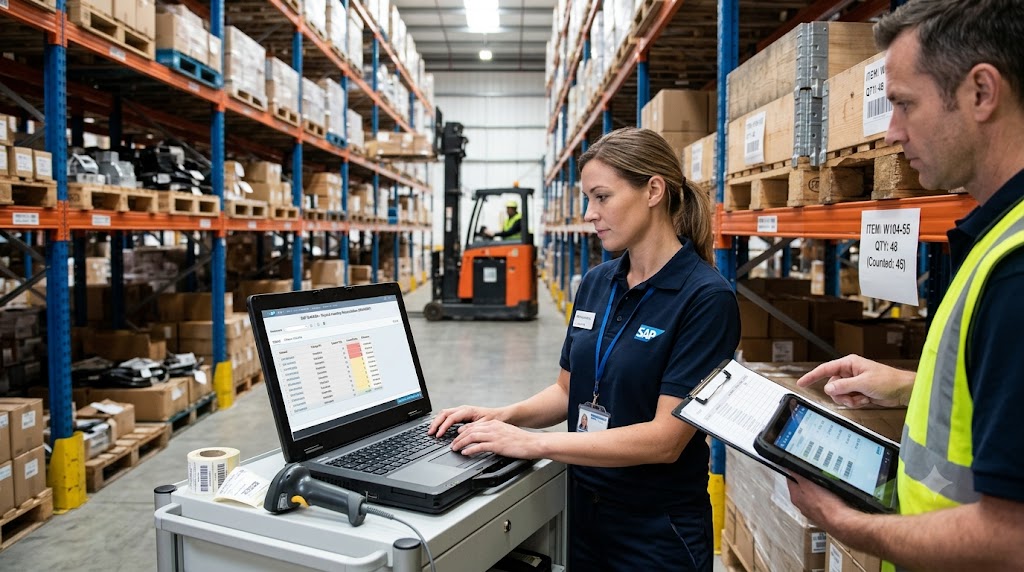
At the time of delivery of the material, the shipment is checked by the warehouse or receiving department against the purchase order.
If there are no issues, then the company posts GR in SAP.
In case of stock material, goods receipt will increase the inventory and create the respective SAP documents and accounting postings depending upon the configuration and material valuation.
In case only part of the ordered material is received, then a partial goods receipt can be created in SAP too.
6. Invoice Verification
Once the delivery takes place, the vendor sends the invoice to the company.
SAP Logistics Invoice Verification process validates the invoice against the purchasing and goods receipt information.
One of the most critical controls of the 3-way match:
Purchase Order – Goods Receipt – Invoice
Example
The order was for 1,000 units, the receipt was for 1,000 units, and the invoice is for 1,000 units at the agreed price; then there is no problem as far as the quantity and price are concerned, and therefore the invoice should not have any problems getting through. If there is a considerable difference, the invoice may be blocked.
7. Payment Processing
Once the invoice gets approved and verified, then the invoice can go ahead with the payment processing.
At this point, the procurement process will have gone through all the phases from need recognition to finally the payment.
Key SAP MM Procurement Documents
The key procurement documents that need to be understood when learning SAP MM include:
| Document | Purpose |
| Purchase Requisition | Internal request to purchase goods or services |
| RFQ | Request sent to suppliers for quotations |
| Quotation | Supplier’s commercial offer |
| Purchase Order | Formal order placed with the supplier |
| Goods Receipt | Confirmation that materials have been received |
| Invoice | Supplier’s request for payment |
In combination, these documents ensure visibility and traceability within the SAP procurement process.
Benefits of SAP MM Procurement
When implemented correctly, the SAP MM procurement process could enable an organization to:
- Automate the procurement process
- Ensure proper inventory planning
- Monitor procurement expenses
- Enhance supplier management
- Eliminate manual data entry processes
- Provide visibility into purchase orders
- Detect discrepancies in invoices
- Integrate procurement with financial processes
- Increase supply chain visibility
- Make better purchasing decisions
Conclusion
The SAP MM procurement process enables an organization to follow a step-by-step approach in managing its purchasing process from procurement needs identification up to procurement through supplier selection, ordering, delivery of goods, and payment of invoices. Knowledge of this process is very critical for SAP MM consultants, procurement experts, supply chain managers, and even people seeking to work with SAP and enterprise software.
If you’re looking to build practical SAP skills, NextNow offers SAP-focused training designed to help learners develop practical knowledge and prepare for careers involving SAP and enterprise technologies.
FAQs
What are the steps in SAP MM procurement?
There are several major steps, such as purchase requisition, vendor selection, Purchase Order, goods receipt, invoice validation, and payment. Altogether, these steps create the SAP procure-to-pay (P2P) process.
What is the difference between PR and PO in SAP MM?
Purchase Requisition (PR) is an internal document that represents a request to acquire certain goods or services. Purchase Order (PO) is an official document sent to the supplier.
What is three-way matching in SAP MM?
This process involves the comparison of the Purchase Order, Goods Receipt, and Invoice in order to ensure that quantities and prices in all these documents match.
What is going on after a Purchase Order?
After Purchase Order creation, the supplier sends the goods to the company, which creates the goods receipt in SAP, after which the invoice is validated.
How does SAP MM interact with SAP FI?
SAP MM is interconnected with SAP FI at the stages of goods receipt and invoice validation, making automatic financial postings.