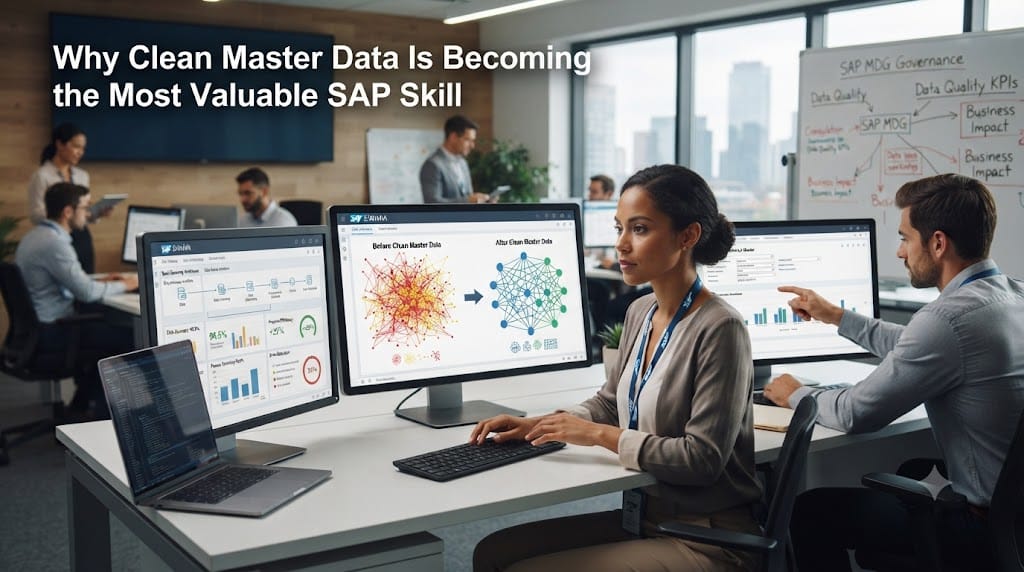


Why Clean Master Data Is Becoming the Most Valuable SAP Skill
Have you ever thought about the basis of some well-functioning SAP projects that are able to run like a watch, while other SAP projects appear to be endless fire drills? Often, a major reason is a piece of one unglamorous issue – master data. Whenever there are vendor records, material numbers, customer data, chart of accounts. If there are messes, duplicate and outdated information it means all the reports will not work properly, automation is malfunctioning, and of course even the most sophisticated implementation of S/4HANA will tremble. That is why clean master data management has started to become one of the most important skills.
The Silent Cost of Bad Master Data in SAP Systems
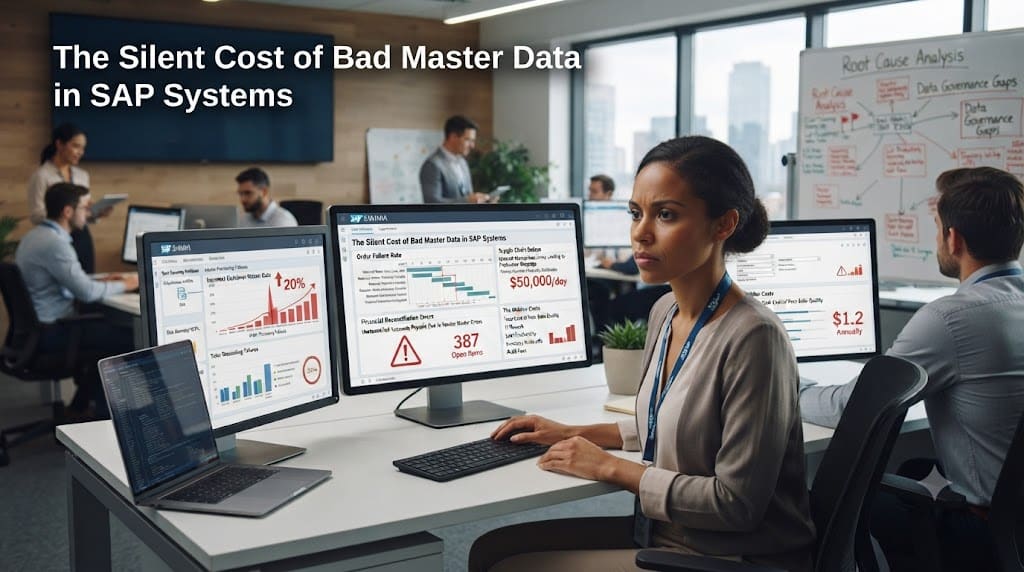
Bad master data does not announce itself with a bang. It can be manifested in the form of a duplicate vendor, which results in double payment; an incorrect tax code, which causes compliance issues; and erratic material numbers confusing the procurement groups in different production facilities. Over time, minor errors can lead to enormous financial and operational risks. Companies using SAP ECC or S/4HANA cannot fully rely on master data for anything, from closing short in the financial quarter to supply chain planning. When master data management is not effective, no matter how efficient the SAP modules, they cannot give correct results. That is why companies expect consultants to have deeper knowledge in data governance instead of sticking to configuration only.
Why S/4HANA Has Raised the Stakes for Data Quality

SAP has made progress in the sphere of real-time processing as well as simplified data modelling thanks to S/4HANA. This is good news in terms of performance, but it also means there is no room for duplicate or inconsistent data. Old procedures that were meant to deal with incorrect records just won’t work anymore. Migration processes often get delayed or cancelled due to the fact that master data is not cleaned properly before it is migrated. Being able to profile, deduplicate, and standardize data is now becoming a must-have skill and is being included in the SAP Certification program.
How Clean Master Data Skills Boost Your SAP Career
Recruiters are looking for more than just a person who can do the vendor master or set up the materials type. Instead, they are looking for candidates who possess expert knowledge in data structure, validation rules and governance frameworks such as MDG (Master Data Governance). If you can simply walk into an SAP project and tell others that ‘I know how to clean, standardize and maintain data,’ then you will be unique. That is a competency involved across modules which is valuable for all types of SAP teams. It is a practical and in great demand skill that goes well with either functional or technical SAP expertise obtained through practical experience.
Building This Skill Through the Right SAP Training Path

The great news is that becoming skilled in data quality is possible without changing your career path. A typical SAP Course includes elements such as master data management, migration tools such as LTMC or Migration Cockpit, and best practices in governance. By practicing real scenarios such as eliminating duplicate clients, working with legacy records, and verifying correctness, one will gain confidence which is very useful for applying skills on actual projects. Getting an SAP certification also provides credibility because it demonstrates that you know how things work with reliable data.
Conclusion
It is no longer appropriate to regard clean master data as an ordinary behind-the-scenes function. With the development of SAP systems, which advance in terms of speed, real-time capabilities, and connections between processes, it has turned into a status symbol for people who ensure data quality within organizations. So if you want to acquire this precious skill, you can turn to Nextnow for proper guides, practical tasks, and certificates that can be obtained easily.
FAQs
1. Why is master data such a big deal in SAP? Isn’t it just data entry?
At first glance, it may seem like a simple data entry job, but in reality, master data is the very backbone of the SAP system which includes finance, procurement, logistics, etc. Having duplicate or incorrect data at this level can lead to problems in every other step built on this data. The focus is not on data entry alone. Instead, the aim should be to design its tardiness so as to keep it clean and consistent in the long run.
2. I’m already doing an SAP Course do I need to learn master data management separately?
It does not have to be done individually, but it is important to ensure that it is taught. Master data governance and data migration are included in many quality SAP training programs because organizations expect consultants to know about them. In case your training does not include these topics, ask your tutor to provide you with such information or find a special module elsewhere.
3. Does this skill matter more for functional consultants or technical ones?
Truly speaking, the answer is both. It is required for both functional consultants to configure clean master data records as well as for understanding business rules around the data. On the other hand, the technical consultants use it for migration, validation, and using tools like LTMC or Migration Cockpit. It is a rare skill that one must certainly have no matter which aspect of SAP he or she works in.
4. Will having this skill actually help me get a job or a raise?
Sure enough, recruiters see this as well. Showing competence in data profiling, deduplication, or governance frameworks like MDG means you are addressing a challenge that employers currently face, which makes you stand apart from others who simply know how to carry out configuration steps and this fact often comes up in conversation during your interviews, allowing you to stand out from others.
Explore More SAP Courses & Information