

SAP ERP vs. Other ERP Systems: Why SAP Dominates the Canadian Enterprise Market
In Canada, SAP is everywhere in the business realm; anywhere you go there are people who work with SAP software. Whether you are in an energy business in Alberta, at a bank in Toronto, or at a large manufacturer in Ontario, SAP is the “digital backbone” of how these businesses run their enterprise-wide operations. However, with so many other enterprise resource planning (ERP) systems such as Oracle, Microsoft Dynamics, and NetSuite available, SAP continues to be the market leader in Canada.
When selecting an ERP system, the choice is both technical and strategic in nature. Many Canadian companies that are part of an ever-changing global economy find their biggest challenge(s) when deciding which ERP system to use are scalability, integration, and reliability. In order to compare SAP to other ERP solutions in Canada, let’s highlight the reasons why SAP is the most dominant solution in the Canadian enterprise marketplace.
The Power of Integration: The “All-in-One” Advantage
Large organisations are impeded by “data silos”—in which one software application is being used by the accounting department, another is being used by the warehouse and the human resources department is still trying to use Excel. Many other ERP systems come up short in providing a means to eliminate these gaps without requiring extensive, costly customisation.
The basis of the SAP system is founded on a philosophy of total integration. When a sales order is entered for a particular city, the SAP application provides a direct connection to the inventory system in a warehouse located thousands of miles away, provides software to current inventory levels, adjusts the financial ledgers, and automatically triggers logistics. This degree of integration is precisely the reason that Canadian companies with geographically dispersed, complex supply chains continue to rely so heavily on SAP.
Scalability That Grows with the Great White North
The ambition of Canadian entrepreneurship is unrivalled by almost all other countries. A startup company located in the city of Waterloo, Ontario, may become a fully-fledged global enterprise at any moment in time. Software programs that have been developed for small businesses such as QuickBooks and Sage, can sometimes be less than adequate when companies begin to experience rapid growth, as these systems may hit a “glass ceiling” at that point.
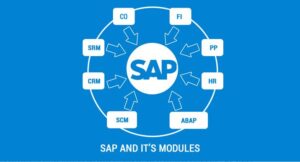
Conversely, the SAP software product is manufactured with the capability to process huge amounts of data and have thousands of concurrent users use it (seemingly) effortlessly. No matter if your organisation employs 10 or 10,000 staff members, by using SAP’s modular architecture to implement additional functional modules (e.g. SAP/MM to enhance your Supply Chain Management and SAP/FI/CO for increased control over your organisation’s Financial Reporting and/or Products) your company will remain “future-proofed” from an IT system infrastructure perspective—the main concern many Canadian Chief Executive Officers (CEOs) have regarding their IT infrastructure choice.
Meeting Canadian Regulatory and Compliance Standards
Canadian tax laws, labour laws, and reporting are unique. One of the key features of SAP is that it is able to provide local compliance and frequently updates their software to ensure compliance with changes in Canada’s tax regulations (GST/HST/PST) as well as labour regulations. Companies in highly regulated industries (e.g., Oil and Gas, Banking) find that having a compliant system makes an enterprise’s compliance program more effective to meet Government requirements.
Comparison at a Glance: SAP vs. The Field
| Feature | SAP ERP | Oracle | Microsoft Dynamics |
| Best For | Large Enterprises | Data-heavy Tech Firms | Mid-market & Windows Shops |
| Complexity | High (Highly structured) | High (Database focused) | Moderate (User-friendly) |
| Integration | Seamless across all modules | Strong, but often fragmented | Excellent with Office 365 |
| Industry Focus | Manufacturing, Retail, Utilities | Finance, Professional Services | Retail, Small-Mid Tech |
The Career Impact: Why the Market is Hungry for Experts
SAP’s market share position is having a profound effect on the Canadian labour market. Many of Canada’s leading businesses are using this application for their enterprise systems, thus creating an ongoing, high-level, urgent “skills gap” between the supply of SAP talent and the current demand from those companies.
The importance of specialised education comes into play with regard to qualifications for enterprise level positions. Merely being able to say you “work with computers” does not qualify you in the eyes of prospective employers and businesses that use SAP.
What employers look for in an applicant who wishes to fill one of these positions includes:
- SAP Training – Hands-on exposure to and proficiency with the actual software and with real-world business examples of successful implementation of various SAP functions in their total software application.
- SAP Course Completion – Documentation that you possess formal educational credentials (in the form of a Certificate) for completing specific modules of SAP training in conjunction with specified SAP functional areas (such as SD, HCM, or Basis) that support the operations of the business that employs you.
- SAP Certification – The “gold standard,” which tells the hiring manager at a Calgary or Halifax business that you have achieved the global benchmark of SAP certification for validated knowledge of how to operate the system effectively.
These three credentials on your résumé provide you with not only an opportunity for employment in Canada, but also will provide you with significantly faster advancement opportunities to higher levels of management classification and higher compensation.
Final Thoughts
While some other ERP systems have their value, there is no competition for SAP’s capabilities to perform the “heavy lifting” of massive volumes of corporate data; therefore, SAP is, by all accounts, the #1 ERP choice among companies in Canada. For companies that use SAP, they see clarity and efficiency from the use of this software. Users who become experts at SAP, they will enjoy both job security and compensation as a long-term career path.
If you would like to work in this high-stakes environment, the best way to get started is by having the right guidance. At Nextnow, we are experts in creating bridges between ambition and employment. We have developed proven education programs that teach our students the skills they will require to succeed in the Canadian SAP market; thus, you will not simply be looking for work, but rather you will be creating your future.
FAQs
Why do I see SAP on almost every major Canadian job posting?
That’s a really good question! Canada’s economy is based largely on “heavy” industries – such as mining, oil and gas, and large-scale manufacturing – that require a high level of complexity to operate effectively. SAP is the only software designed to manage these large and complex businesses across multiple provinces and countries. Because of this, many of the world’s largest companies, including Suncor and RBC, regularly recruit employees with SAP Training, so they can continue to operate efficiently. By mastering SAP, you will have the qualifications needed to work for some of the largest employers in Canada.
How is SAP actually different from something like QuickBooks or Microsoft Dynamics?
Let’s use an analogy: when you drive a small business around town, you would drive a dependable sedan, like QuickBooks. Conversely, you would drive a shipping company with large cargo vessels like SAP. If you own a company that uses Microsoft Dynamics and needs to connect operating systems, you’ve got a good fit – but primarily for organisations with 500 or more employees. However, in addition to connecting systems, SAP has ways to connect all components of your business operations. If you have any businesses in Toronto that sell parts to your company in Calgary, you can have your entire operation tracked in a single location through SAP. Therefore, learning how to use the “big ship” of corporate data makes attending a specialised SAP Course a very worthwhile investment.
Is an SAP Certification really worth the effort in the Canadian market?
Short answer? Yes. As we discussed at the beginning of this blog when hiring managers are reviewing resumes, in a competitive city such as Toronto, Vancouver or Montreal, there are often hundreds of applicants who apply for the same job. An SAP Certification provides you with a certain “fast pass” when being considered for the position. It shows the employer that you not only know what SAP is, but also have the ability to use it according to internationally recognized best practices. In many cases, this will be the only thing that will move your resume from the “maybe” pile into the “interview” pile.
Does SAP help with Canadian taxes and regulations?
One of Canada’s hidden advantages is that it has a combination of federal and provincial taxes (GST/HST/PST) which creates complexity for large organisations. SAP is designed for Canada because it has been configured to ensure compliance with Canadian tax and employment government regulations. This gives organisations peace of mind that they will not have an issue with their tax filings due to errors in computing their taxes resulting from a lack of understanding of Canadian tax regulations.