

What Recruiters Actually Check During an SAP MM Interview
If you have finished your SAP training, acquired your SAP certification, and accepted an interview offer for an SAP MM position, the first thing you should know is that assuming you can rely solely on your theoretical knowledge to pass an interview is one of the most significant errors of new and/or experienced applicants. Therefore, when applying to learn about SAP MM from a recruiter, it’s important to take into account that they do not simply go through a list of questions during the interview process. Instead, they evaluate the way you phrase your answers, use examples from past working experiences and demonstrate your ability to apply your knowledge of SAP MM within operational settings. Here in this blog we give you proper information about what recruiters actually check during an SAP MM interview. So, stay tuned with this blog.
They Test Your Understanding of the Procurement Cycle — Not Just the Steps
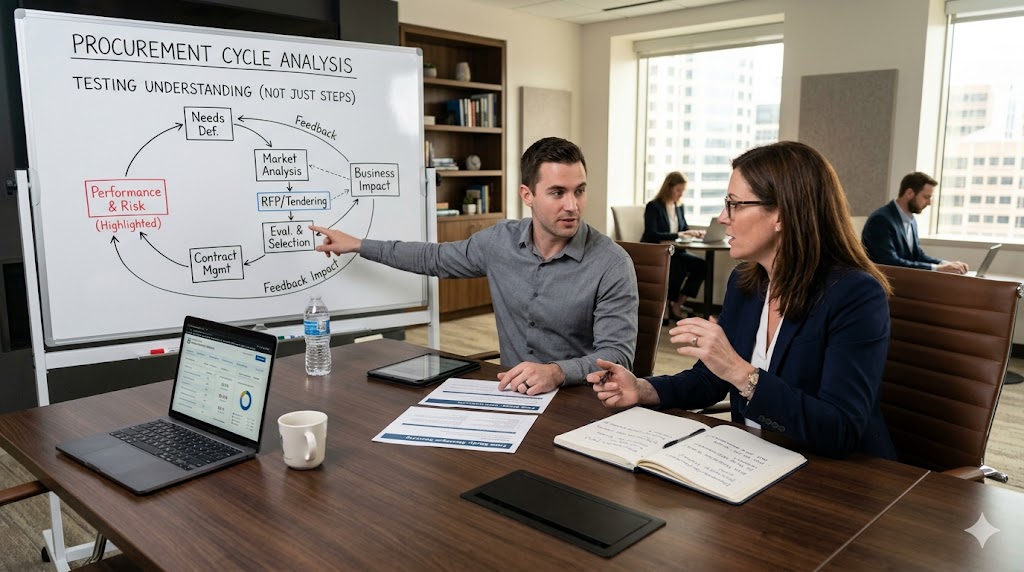
The procurement cycle is something a candidate who has taken an SAP Course can tell you without question (e.g. Purchase Requisition, RFQ, Purchase Order, Goods Receipt and Invoice Verification). Recruiters have heard these answers over and over again by a considerable number of applicants.
What they want to know is whether you really understand why the various steps are necessary, and how do they relate to one another. Can you explain the implications of posting a goods receipt without having an associated purchase order? Do you know what is involved in performing a three-way match between a PO, GRN and invoice? The distinction between someone who has taken training versus someone who really understands the module comes down to these types of answers.
They Dig Into Vendor Master and Material Master Configuration

Master Data is one of the biggest areas that recruiters ask about, as they want to see what level of practical experience you have. You should expect to be asked questions relating to how vendor master data is configured by company code and purchasing organisation; what is the purpose of each of the views within a material master; how are MRP types used to drive procurement planning.
If your SAP Training included practical experience of these configuration items, then you will have no trouble with your interview responses in this area; if not, you will likely find it difficult to respond in this area, as do many of your fellow candidates.
They Ask About Real Business Scenarios, Not Textbook Answers

There aren’t many ways to assess a candidate’s ability to use SAP MM when interviewing for an SAP MM position than using a case study approach. An interviewer will probably present you with a business case (ex: merchandise has been received on a purchase order but only partially) and ask how you would handle the situation, what your response would be in the SAP system, and what would happen to the merchandise that was not received.
Cases such as these are used to judge if your SAP training was enough to provide you with true hands-on experience versus merely being familiar with the tool (SAP). People who have worked in real production systems or very structured training environments will provide confident answers. Conversely, those who studied for their exams from only slides will have difficulty answering these types of questions.
They Check Your Knowledge of Inventory Management
A major focus during the interview process will be understanding the movement of goods under SAP MM. Basic information on each of the four goods movement types (101, 122, 201 and 261) must be known as well as when they are applied and what entries they create on the accounts. You will also need to show that you can differentiate between unrestricted stock, quality inspection stock, and blocked stock, as well as how to transfer stock between plants and storage locations.
They Evaluate Your SAP Certification and What It Actually Covers
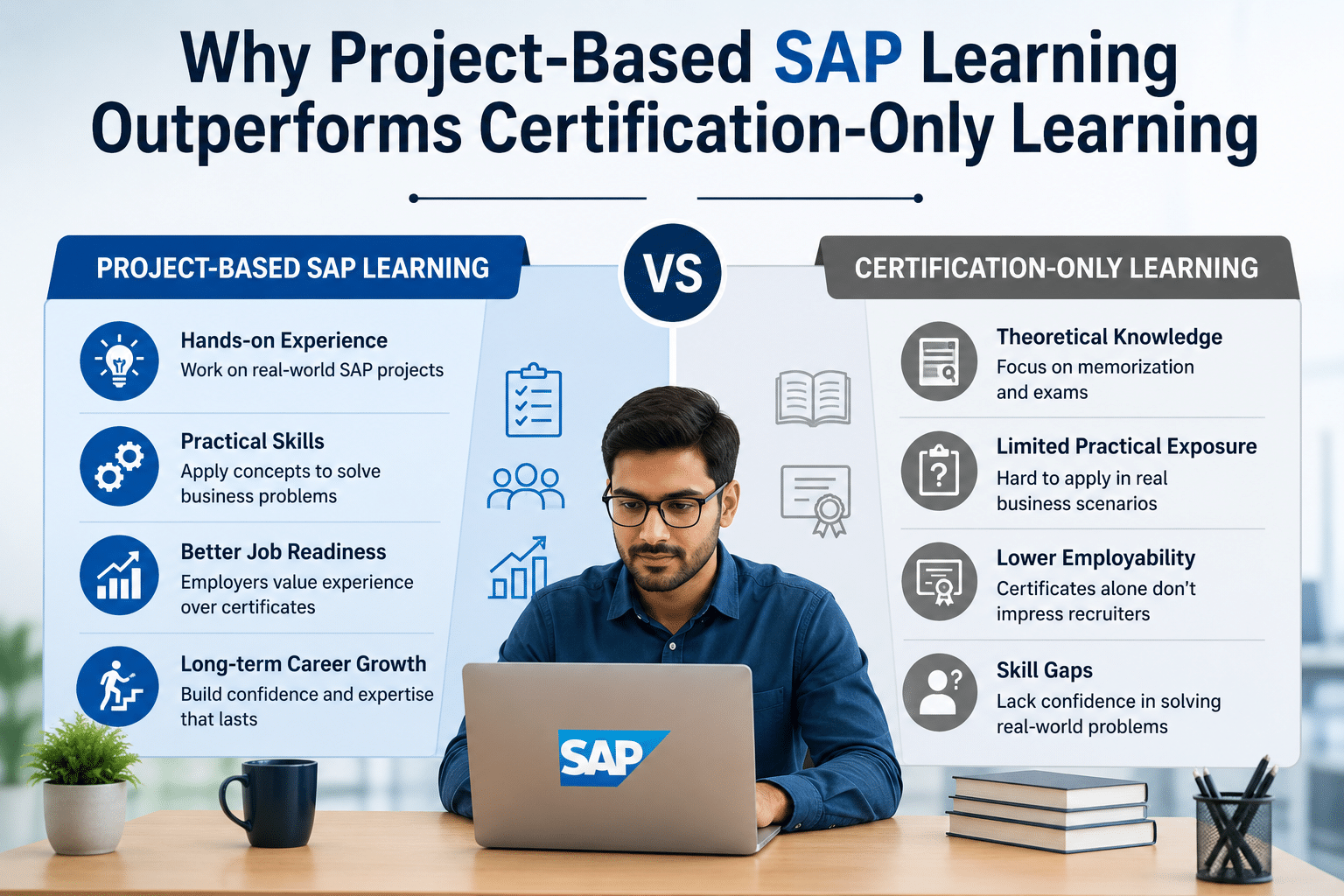
If a recruiter sees that you have a certification from SAP on your CV they will likely give you an interview; however they will then look to see if you can prove you have the skill set you claim to have by examining the type of certification, the exam focus, and if you can substantiate your level of hands on experience with what the certification represents. If you can provide evidence of significant hands-on experience for a particular certification it will create a greater impact with the recruiter.
They Notice How You Communicate Technical Concepts
Many candidates find this to be a surprise; recruiters are not solely hiring based on technical expertise alone – the individual that they hire will be expected to work with business users, project managers, and cross functional teams. Therefore, the clarity with which you can describe an MM process using simple words is just as important as simply knowing what the answer is.
Conclusion
Having a serious SAP learning experience can mean a lot more than just answering questions correctly; it also means the learner has an understanding of how things work in the world of SAP, both in theory and practically. For learners seeking to gain real-life experience and use their exposure to real scenarios during the interview process through practical hands-on SAP training and knowledge of recognized certificate programs, Nextnow is where to go to truly prepare yourself to get a job after completing a comprehensive and thorough SAP training program.
FAQs
1. Do I Need Prior SAP Experience Before Appearing for an SAP MM Interview?
That is not a requirement. A candidate with prior work experience in procurement, supply chain management or inventory management may still be able to obtain their first SAP MM job without having access to a prior SAP job. The important thing is if you demonstrate enough hands-on experience with the module, from your SAP training, to get the attention of a recruiter. When looking to hire a candidate that has recently graduated from college, recruiters will recognize that the candidate does not have experience working on a live project; therefore they will be looking to see your familiarity with the procurement cycle within the SAP MM module, and how to align SAP MM processes back to business scenarios.
2. How Important Is SAP Certification When Applying for SAP MM Roles?
There is an authentic worth to an SAP Qualification, as it reflects to an employment recruiter your commitment to study the module, with the whole validation suggested by the level of competency that you possess in your understanding of this topic. However, employment recruiters may not use certification solely as a basis for employment; rather, they will use it as an indication to start the recruiting process on your case prior to interviewing you for your experiences. The best candidates are those graduates from an SAP program who obtained both their SAP certification and their proficient hands-on experience, where they are able to speak to it with a measure of assurance.
3. What Are the Most Common Topics Asked in an SAP MM Interview?
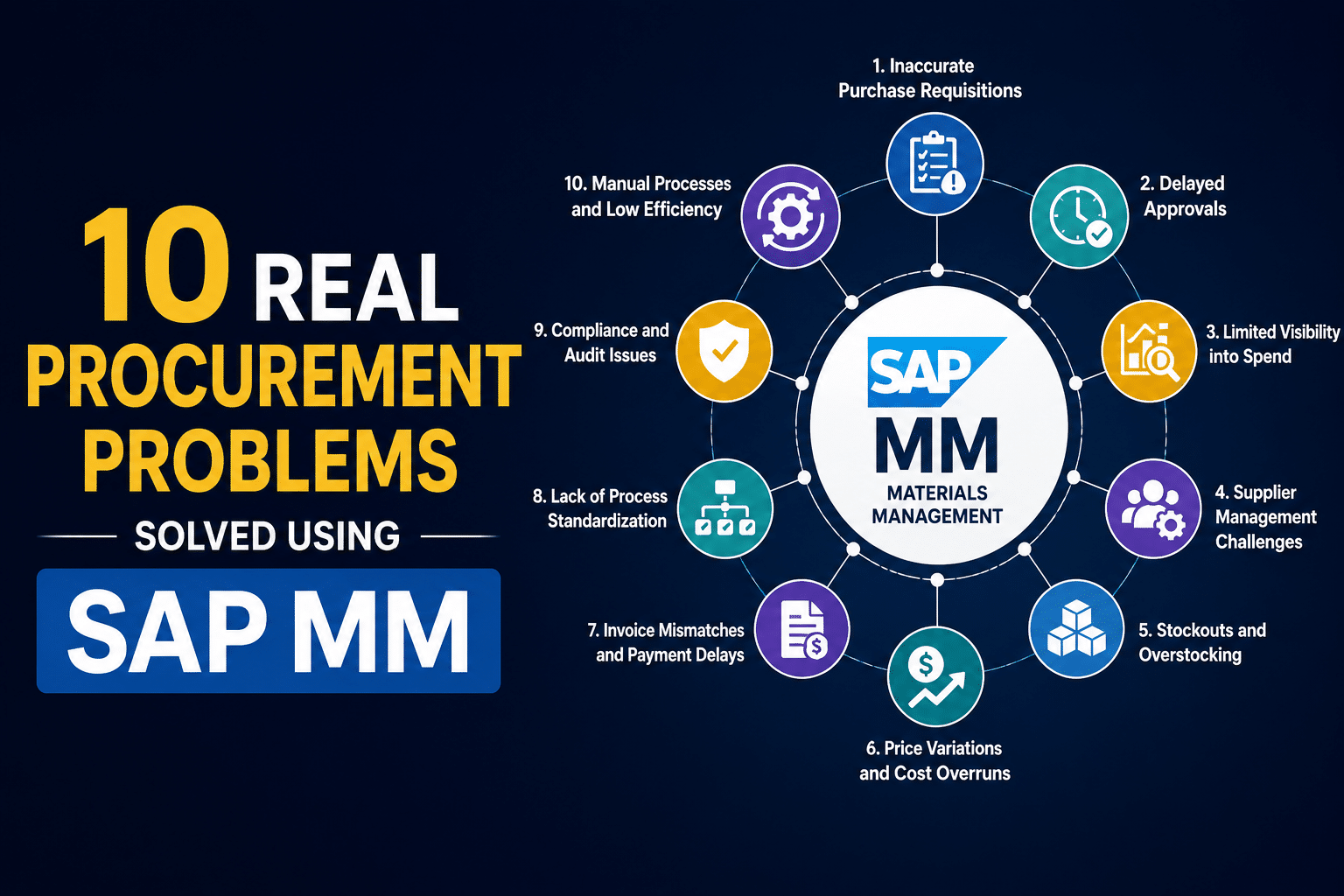
The majority of SAP MM interviews will likely emphasize the integral relationships between the end-to-end purchasing process, configuring the vendor and material masters, tracking and managing stock, processing invoice verification, implementing a 3-way match, and tracking goods movement. Typical questioning will be situational, demonstrating the individual’s practical application of knowledge to overall real-world business scenarios, as opposed to simple regurgitation of definitions. You should have learned/simulated all of the above examples throughout your SAP training program.
4. How Do I Answer Scenario-Based Questions If I Have No Live Project Experience?
One of the main concerns for new recruits is how to answer behavioural questions. However, if you have previously completed an SAP Course which included an opportunity to gain some practical experience using scenarios (e.g. through completing a procure-to-pay cycle, posting goods received, conducting invoice verifications), then you will likely already have sufficient knowledge of the scenario to provide the recruiter with a coherent response. Provide the recruiter with a detailed step-by-step explanation of how you arrived at your answer. The recruiters appreciate logical reasoning, regardless of your lack of live project experience.