

SAP MM Training Challenges and Solutions: Expert Advice
SAP MM Training Challenges and Solutions: Expert Advice – SAP is a world leader in ERP. It provides a retinue of modules and attributes that help businesses maintain several important procedures. It also offers a current view of business operations so companies can make data-driven resolutions. Moreover, despite these huge benefits, businesses often struggle with unexpected challenges during SAP implementation. The sheer field of SAP, designed to mechanize and optimize complex procedures across all angles of a company, naturally makes it hard to implement successfully. However, these types of challenges and issues should not deter businesses from using its benefits.

If you follow the right procedure and the best SAP execution procedure, it is fully possible to solve all challenges easily. So are you struggling to successfully position and use SAP systems to collect data, smooth operations, gain current insights, and achieve business success? Then get ready to learn about the most challenging outline businesses often meet when utilizing SAP systems and read on as we also talk about the SAP MM Training Challenges and Solutions: Expert Advice for these types of problems.
SAP MM Training Challenges and Solutions: Expert Advice
New SAP MM (Materials Management) consultants usually face various common challenges as they start their career journey. In the given below section we have explained the SAP MM Training Challenges and Solutions: Expert Advice:
- Complexity of SAP MM – SAP MM is a compound module with various functionalities and procedures. New consultants may feel overcome by the broadness of knowledge needed.
Solution – Start with a full understanding of the basics. Invest time in proper training, including official SAP documentation, online tutorials, and hands-on practice in a sandpile environment. Seek assistance from experienced consultants or join user meetings to ask questions and learn from others’ experiences.
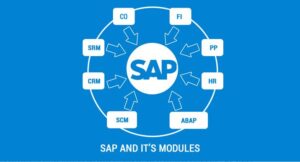
- Integration with Other SAP Modules – SAP MM meets closely with other SAP modules such as PP (Production Planning), SD (Sales and Distribution), and FI (Financial Accounting). Understanding these combinations can be challenging for trainees.
Solution – Take the time to know more about the incorporation points between MM and other modules. Attend transverse training sessions or workshops to learn how data flows contrast modules. Meet with consultants and experts in other modules to get insights into their benefits and how they meet with MM.
- Customization and Configuration – SAP MM executions often need customization and arrangements to meet the particular requirements of every organization. New consultants may find it hard to navigate the creative options and understand how to tailor the system successfully.
Solution – Start by acquainting yourself with the standard MM configuration settings and procedures. Get hands-on experience by working on real projects or imitations where you can practice building the system according to business needs. Document your organization and seek feedback from squint or mentors to ensure authority.
Some More SAP MM Training Challenges and Solutions: Expert Advice
- Business Procedure Understanding – SAP MM consultants require a strong understanding of ownership, inventory management, and logistics procedures to efficiently build and optimize the system.
Solution – Cooperate closely with business partners to get insights into their procedures and pain points. Shadow experienced users or participate in procedure workshops to learn how SAP MM helps key business activities. Constantly teach yourself about industry best practices and trends in possession and supply chain management.
- Troubleshooting and Support – As new consultants experience problems or errors in the system, they may fight to diagnose and solve them successfully.
Address – Build strong knowledge about problem-solving skills by actively investigating solutions in knowledge bases, SAP documentation, and online forums. Build a network of friends and mentors whom you can reach out to for encouragement when experiencing challenges. Document balance steps and solutions for future recommendations.
- Communication and Stakeholder Management – Successful communication with both non-technical and technical collaborators is important for successful SAP MM executions.
Solutions – Sharpen your communication skills by rehearsing clear and brief formulations of compound technical ideas to various audiences. Actively cooperate with collaborators throughout the implementation procedures to gather needs, solicit feedback, and provide updates. Search for feedback on your presenting style and modify it accordingly to build strong relationships with organizations.
Addressing Typical SAP MM Training Challenges
1. Integrating Concepts and Practical Applications
SAP MM trainees often struggle to link conceptual modules–particularly purchasing, inventory management and invoice verification–to nearly every business activity. In these situations, it is best to provide case studies and live examples that demonstrate typical dilemmas within manufacturing, retail, and logistics environments. The basic, sequential procurement to pay processes, particularly the three-way invoice matching process, will help trainees to understand the importance of each step and what occurs in an environment: goods receipt, invoice processing, posting to accounts payable, and so on.
2. Navigating Complexity in an Integrated SAP S/4 HANA Environment
SAP MM does not exist alone as it is routinely integrated with Finance (FI), Controlling (CO), and Sales & Distribution (SD) modules. A key obstacle is understanding the impact of a purchase order on accounting ledgers, or the connection between master data for a vendor and how a purchase order in MM may impact a purchase order for goods receipt. To address this, it is important that the training includes integrated exercises where MM interacts with FI/CO. For instance, a hands-on exercise that allows a trainee to post a goods receipt and see the impact on the purchase order in the various accounting ledgers in real time would be helpful.
3. Configuration and No programming
MM is considered configuration-saturated and often daunting to trainees who lack programming knowledge. Trainers can eliminate confusion by walking learners methodically through each IMG (Implementation Guide) node by describing the settings for valuation class, account grouping, and how to determine the movement type, and by having them learn step-by-step in the classroom or acknowledging what to do with these steps through the instructor’s comments and discussions.
4. Establishing Valid Master Databases
Quality problems related to data, in particular around material master records and vendor records, are a common issue. Training should emphasize the importance of correct and valid fields, particularly where they are important (for example, material type, valuation class, purchasing group), and include e data audit drill, where learners are tasked to clean up fictitious master data, tag inconsistencies, and report on which procurement or inventory policies are affected.
5. Don’t Make Analytics Difficult; Use the SAP Query & LIS
Even if MM is configured correctly, learners need to be able to correctly benefit from their data. Embedding hands-on labs using SAP Query and Logistics Information System (LIS) in the training will allow trainees to take ownership of building custom outputs or reports, such as time against contract delivery, stock in transit, stock turnover, vendor performance, without relying on unfamiliar technical resources or technical resource coding.
Practical Improvements Nextnow
Workshop labs based on scenarios – Develop source to pay challenges in labs, for example, using scenarios to develop a vendor price variance analysis report, resolving a stock out of an item in the par, or managing a purchase order change across a vertical or cross-functional tree.
Live System Software – Provide “sandbox” environments for the learner(s) to engage and practice in meaningful, real-life actions – for example, issuing POs, recording GRs, posting invoices, and performing financial postings at the same time, so that learners can experience the results and learn from them.
Peer Collaboration Sessions – Engage trainees in group activities that replicate organizational behaviour within departments, and order-to-cash cycles. For example, one trainee can manage purchasing, another can receive, and a third can approve invoices, to simulate departmental workflow.
Structured Recap & Reflection – After each module, provide a structured session to reflect: have the trainees describe one thing they learnt, one thing they were unsure about, and one thing they can apply in the workplace.Follow‑Up Refresher & Community Software – The use of optional monthly online clinics or a community of practice would be helpful where previous participants can ask random MM-related questions, and share how they are using the insights learnt in their position.
Why is SAP MM Challenging?
SAP, like many other ERP systems, wants proper planning and effort for successful execution. It is not an immediate solution but requires to be tailored to fit your particular business requirements, and often needs huge arrangements. Think about something as basic as “order processing.” With SAP, you are required to think about when orders enter the ERP system, where the order procedure takes place in contrast to the transaction, what happens to the order documentation, how it is defeated within the system, whether it needs special maintenance, and how it is eventually recorded. Now imagine when you are dealing with much more complex procedures. Innovating and managing SAP workflows for such procedures will be even more difficult and challenging. So Installing and using the SAP system is challenging because it is a certainly powerful ERP that needs complete planning and arrangements to align with particular business operations. And often, businesses are not ready for it, which makes execution unsuccessful.
Conclusion
By inscribing these basic challenges or difficulties through a combination of education, collaboration, hands-on experience, and constant development, new SAP MM consultants can make a solid base for achievements in their professions.
Contact Nextnow today for SAP training and certification in Canada.
Some Frequently Asked Questions(FAQs)
Question 1 – How much experience do we need to become a SAP MM Consultant?
Answer – We need a minimum of 2 years of experience to become a SAP MM Consultant.
Question 2 – Is the SAP MM industry good or bad?
Answer – The SAP MM industry is one of the best IT industries for candidates wanting to build careers.